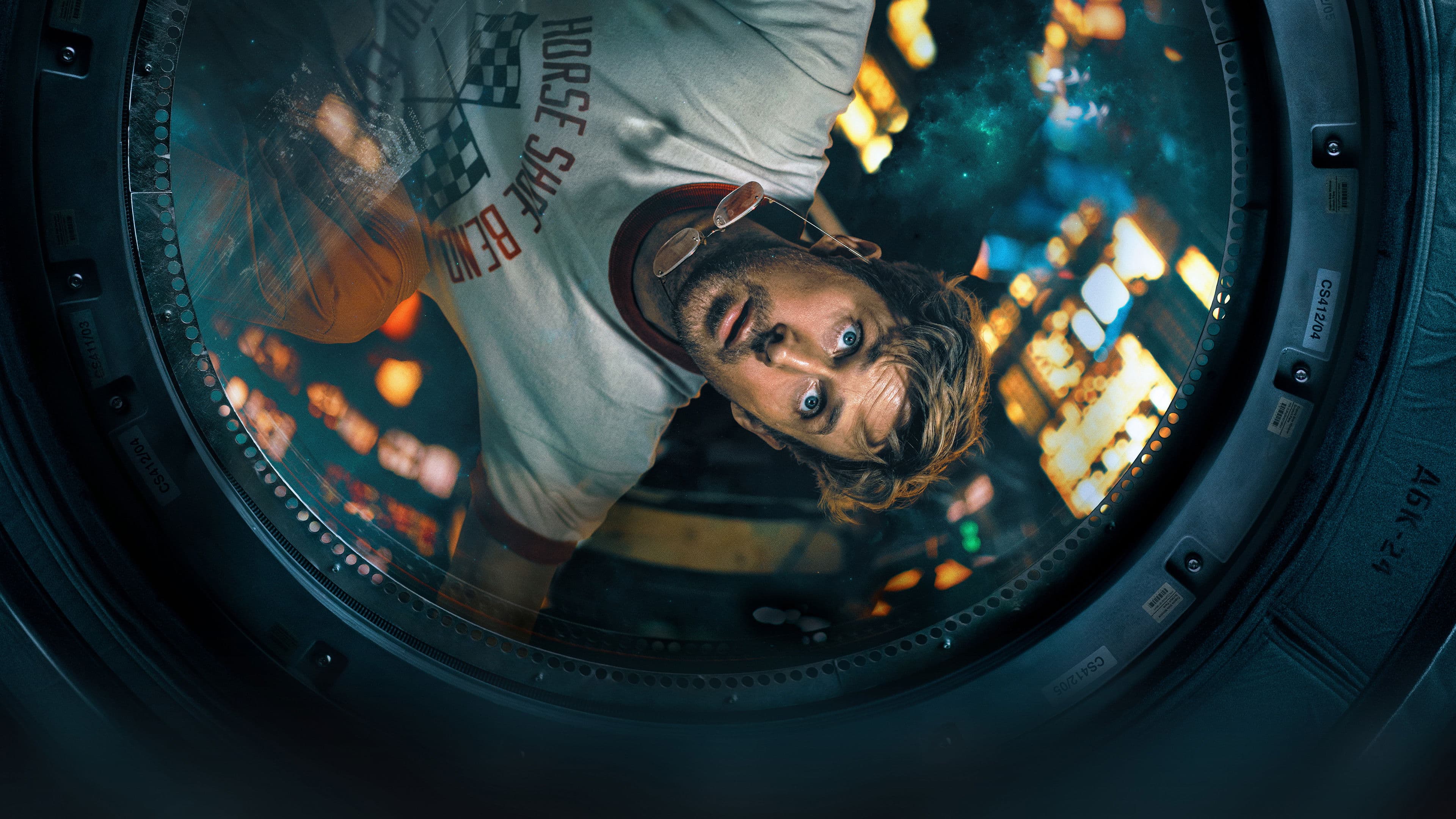
Science fiction, to me, always meant aliens, time travel, intergalactic battles, spaceships. Then I watched Christopher Nolan's Interstellar. I cried my eyes out through the whole thing, and something shifted: sci-fi could carry real emotion if the writing did the work. Andy Weir's Project Hail Mary gave me that same feeling on the page. I enjoyed the plot (yes, saving Earth from dying is cool), but I kept reading because I was rooting for the protagonists. And now I've finally seen the movie adaptation, and it did the book justice.
The story follows Ryland Grace, a high school science teacher played by Ryan Gosling, who ends up alone on the spaceship Hail Mary trying to save Earth from extinction. Microscopic organisms are eating the Sun. It's dimming, and the planet's ecosystem goes with it. Grace's mission is Tau Ceti, a star that somehow stays immune while the Sun and its neighbors fade. He meets someone out there. Who, and how that plays out, is the emotional core of the novel, so I'll say nothing more.
Gosling wasn't my mental image of the lonely scientist. His Ryland won me over anyway. Sandra Hüller nails Eva Stratt, and Rocky is realized so well I can't imagine the character any other way now. The visuals deserve their own paragraph, honestly. The cinematography and VFX on the space sequences are gorgeous, and I say that as someone who's watched a lot of space movies since Interstellar ruined me.
Having read the book first, I noticed flaws a casual viewer might miss. The movie captures the book's comedic tone, but plenty of moments tip over into cheesy. Cringeworthy, even. Grace's portrayal bugged me more. The book earns his brilliance through long stretches of science and math, and the movie cuts nearly all of it. A sensible call for runtime, since nobody wants a lecture in a theater, but the cost is real: most of the visible brainpower goes to Rocky, and Grace tags along with occasional flashes of insight, which undersells his intelligence badly.
And then the pacing, which is where this review's title comes from. The beginning and the end both feel rushed. The flashback sequence where Grace regains his memory piece by piece is where you learn who he is, and the movie strips out his inner dialogue during those scenes. So the opening skips through the material that matters most and lingers on setup scenes, though I get why a first-time viewer needs some of them. The climax has the same problem. The struggle and motivation behind Grace's final decision get compressed into a sprint.
The middle stretch is the strongest part, carried by those visuals, and at 2 hours 36 minutes the whole thing still felt too short to me. Double the runtime and I'd have watched every minute. A director's cut, Zack Snyder's Justice League style, would not be a bad idea.
I'm trying to let go of the expectation that an adaptation must reproduce the book scene for scene. Cuts happen. The movie and the book ended up complementing each other. The movie stands on its own, and readers get extra detail as a bonus. See it in IMAX if you can, or 70mm IMAX if you're lucky enough to live near one. Project Hail Mary is a complete success.
One more thing. After watching, I found a popular YouTube video where a real astrophysicist breaks down the science in both the book and the movie. You come away seeing how much homework Weir did to make invented science hold together. Go watch that one too.