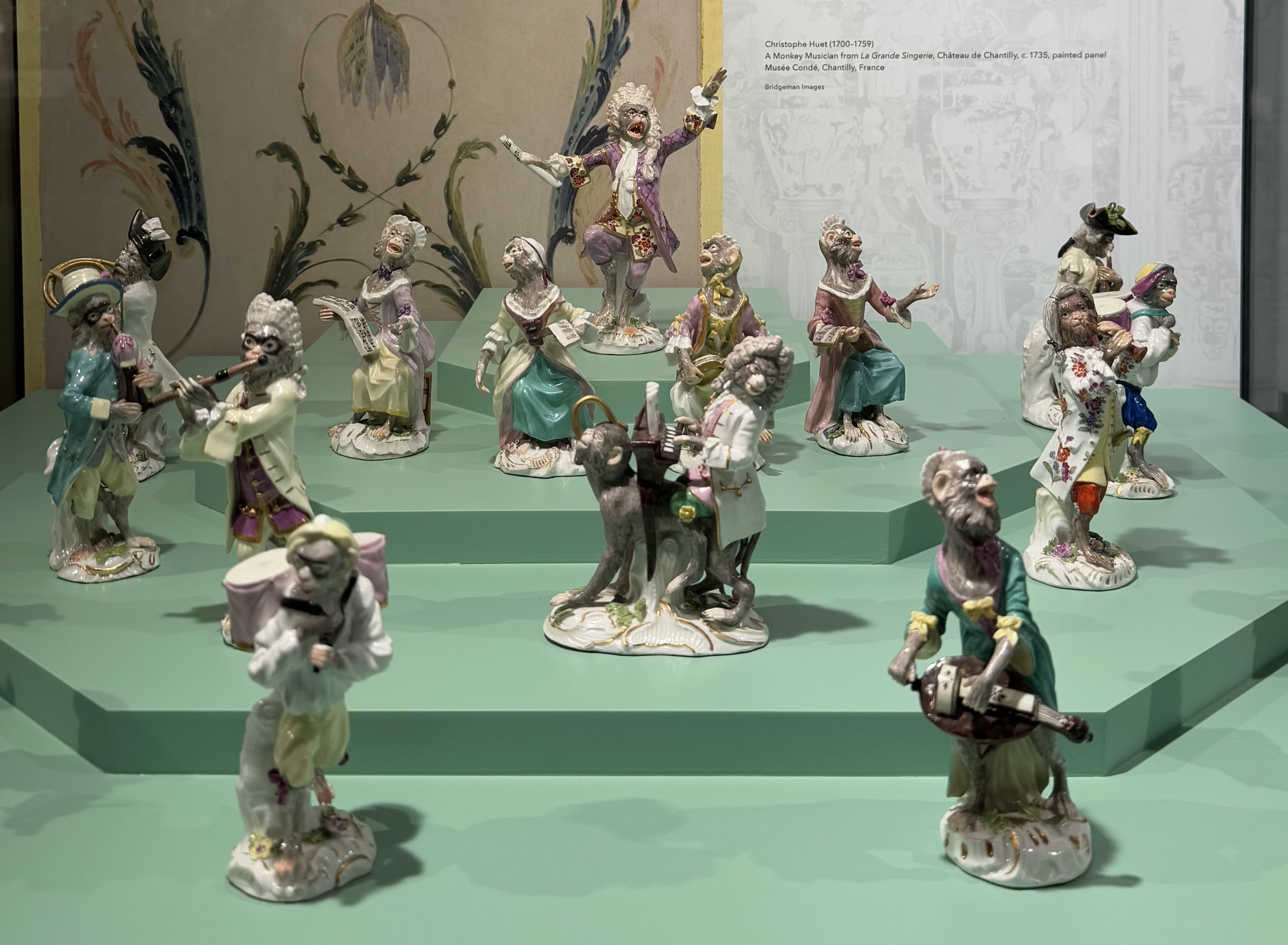
My wife and I had a whole different plan for the day, but the rain killed it and left us hunting for something indoors. We landed on the Gardiner Museum because we had free tickets through the TPL Map Pass (seriously, sign up for a TPL card if you haven't, and use every single perk it comes with). I walked in expecting a general art museum (I should have researched beforehand, I know) and quickly realized the entire museum is dedicated to ceramics. Just ceramics. A whole institution built around a craft that a single couple collected obsessively over the course of their lives.
Walking through the exhibits, you follow the long history of the craft, from basic functional pots to decorative designs, then the arrival of color and print, and eventually modern manufacturing. I found all of it genuinely fascinating. But, somewhere on the second floor, a question started nagging at me. Can any invention or craft still evolve slowly and visibly enough to deserve a museum the way ceramics did?
Because once modern technology took over, progress stopped unfolding in clear phases, and centuries of gradual refinement got replaced by rapid, mostly invisible iterations, the software updates and algorithm tweaks, plus all the internal improvements that nobody outside the company ever sees. There are real advantages here. Ideas spread faster, tools improve continuously. Still, outside of computers and smartphones, I struggle to imagine a future museum walking me through the evolution of an everyday object the way the Gardiner walked me through pottery.
Which left me with a bigger and slightly uncomfortable question. Do we need to start thinking about museums in a completely different way? Or have museums already peaked?
Museums were born in a time when progress was slow and physical. Objects changed shape, materials improved gradually, techniques changed visibly over decades or centuries, and that kind of change makes sense in a glass case, because you can literally point at one object and say this came before, and this came after.
But what happens when progress no longer looks like that?
Today most change happens beneath the surface of objects that outwardly look the same. The phone I carry looks almost identical to the one I had three years ago, yet barely anything inside it works the same way. The progress is all still there. It has just moved somewhere our eyes can't follow. And if museums have always relied on visible change to tell their stories, that is a real problem for them. So, will new museums keep emerging, or are museums slowly becoming places devoted only to the past?
Think about what museums usually collect. Ceramics, hand-made textiles, tools shaped by use, paintings. These objects feel complete, like they arrived somewhere and finally settled into a stable form. Contemporary objects feel unfinished in comparison, they are designed to keep updating and eventually get replaced, and by the time they acquire any historical distance, they may no longer exist in a form worth preserving. Museums do collect recent artifacts sometimes. Something still feels absent there. A first-generation smartphone behind glass feels strangely empty, because its meaning lived in daily use and context, and things like that resist being frozen in time.
Nothing I saw at the Gardiner could be fully explained in writing, and that thought followed me home. Ceramics demand physical presence. You have to feel the weight and see the texture up close, all that accumulated patience of human hands, and you could read about them all day and still not really get them. Most of what we create today is the opposite, our biggest advancements can be explained and archived digitally, and that accessibility is honestly remarkable. But, it also left me a little sad that fewer things now ask us to stand in a room and simply look.
So, maybe the question is what role museums are supposed to play now, and whether they will accept a new one. If they keep defining themselves as spaces for storing and displaying objects, their relevance keeps narrowing. But, turn them into places that preserve context and experience, that show how objects shaped the way we live and think, and they might find a different kind of future. The Gardiner made me care about pottery for a whole rainy afternoon, so it clearly can be done. I doubt the shift comes easily to institutions built on tradition and long-standing authority though.
I left with a whole new appreciation for ceramics, and with the sense that I had witnessed something increasingly rare: a complete, visible history, with a beginning, a middle, and something resembling an end. Our present doesn't offer that clarity, it changes constantly and quietly, and I don't have neat answers to any of the questions above. But, the next time rain wrecks our plans, I already know where we are headed.